The Oldest Fossilized Butthole Ever Found Is 290 Million Years Old
Here’s something you probably didn’t expect to read today: scientists have discovered the world’s oldest known fossilized reptile butthole.
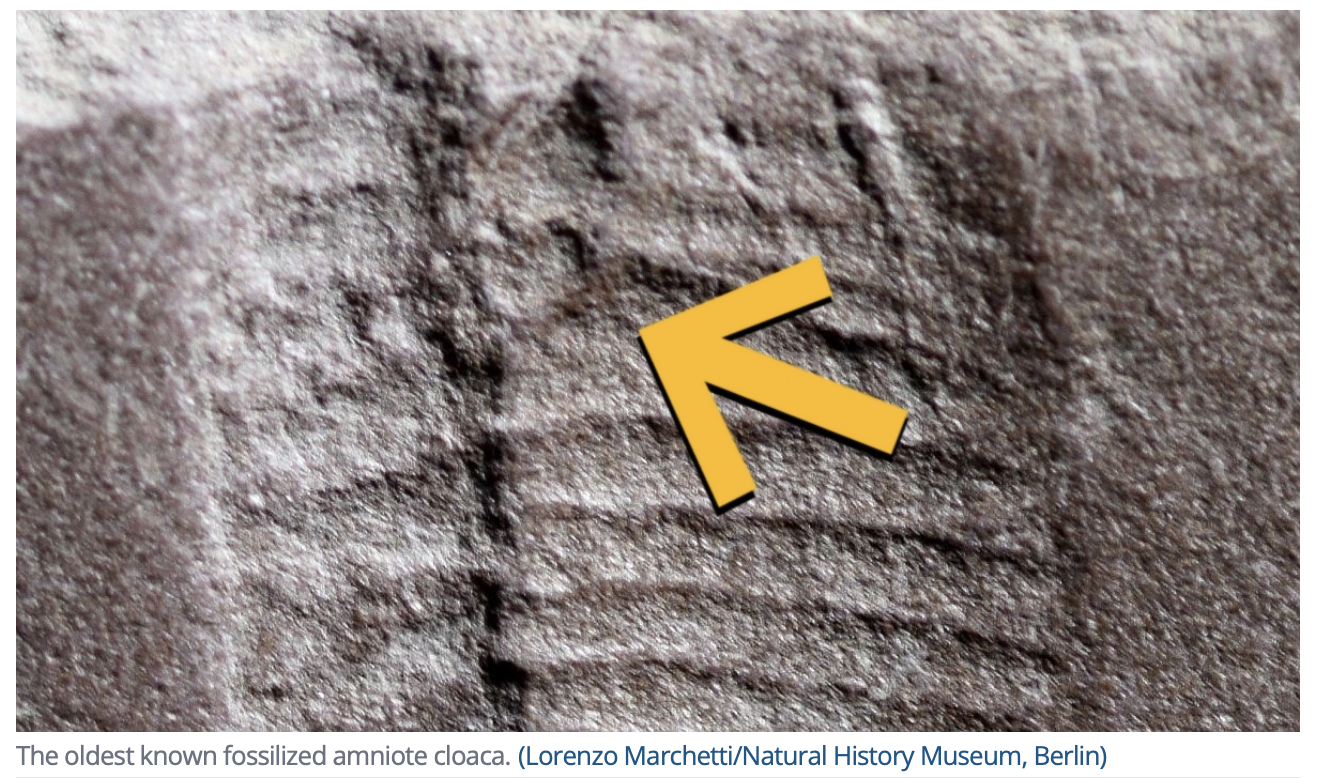
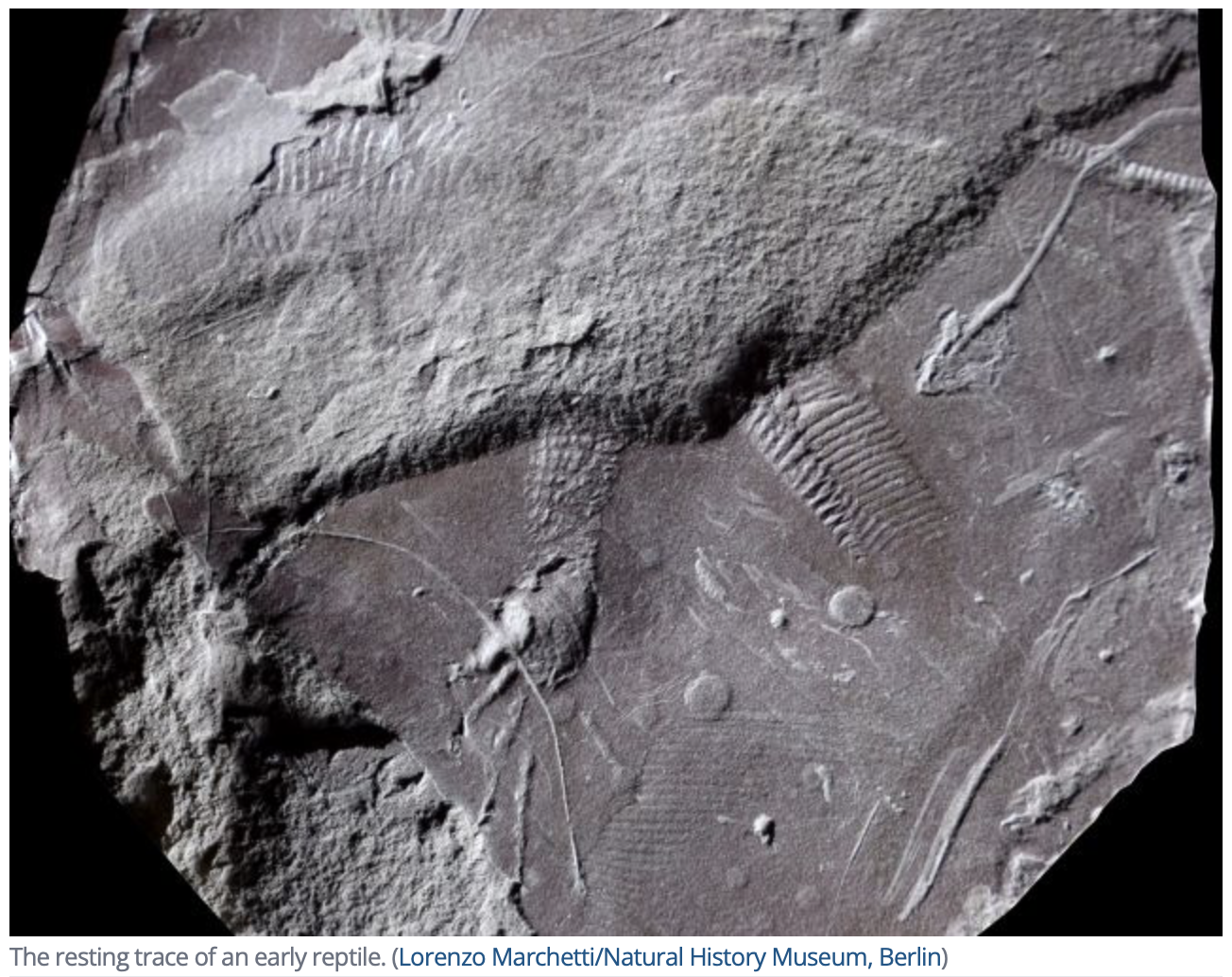
Nearly 300 million years ago, a small reptile paused for a rest in a patch of soft mud. It eventually got up and went on its way — but it left behind something extraordinary. That brief pit stop created the earliest known fossilized skin impression from a reptile, complete with scales and what researchers interpret as a preserved cloaca.
Yes, that cloaca.
For the uninitiated, a cloaca is a multi-purpose opening used by many animals for pooping, peeing, mating, and laying eggs. It’s essentially a one-stop biological shop. And finding one preserved in the fossil record is almost unheard of.
“Such soft-tissue structures are extremely rare in the fossil record — and the further back we look in Earth’s history, the more exceptional they become,” said paleontologist Lorenzo Marchetti of the German Natural History Museum in Berlin.
A Muddy Snapshot From the Permian
The fossil was discovered in Germany’s Thuringian Forest Basin, within the sedimentary Goldlauter Formation. Analysis shows the impression was made by a reptile about 9 centimeters (roughly 3.5 inches) long.
Marchetti and his team named the trace fossil Cabarzichnus pulchrus, identifying it as a newly described species of reptile “resting trace.” Based on its size and nearby footprints, researchers believe it was likely a bolosaurian — an early branch of reptiles that lived around 295 million years ago during the Asselian age of the early Permian period.
This was a pivotal moment in evolutionary history. Reptiles were beginning to diversify rapidly, setting the stage for the rise of dinosaurs and many modern species.
Scales, Skin — and a Showstopper
The fossil preserves an incredibly detailed belly imprint, including rows of polygonal epidermal scales made of keratin — similar to those found in modern reptiles today. These weren’t heavy, bony armor plates. They were true skin scales.
But the real headline-grabber is at the base of the tail.
There, scientists found modified scales surrounding a vent-like opening — what appears to be a cloaca. If confirmed, this makes it the earliest fossil evidence of a cloacal vent in amniotes (the group that includes reptiles, birds, and mammals).
To put that in perspective, the previous record-holder was a 120-million-year-old specimen of Psittacosaurus. This new discovery smashes that record by roughly 170 million years.
Interestingly, the shape and orientation of this ancient cloaca differ from those seen in dinosaurs and crocodiles. Instead, it more closely resembles the anatomy of modern turtles, lizards, and snakes — offering new insight into how reptile anatomy evolved over time.
Why This Matters
It might be easy to laugh at the idea of a fossilized butthole making scientific headlines, but this discovery is a big deal.
Trace fossils — which include footprints, resting impressions, and other indirect evidence of life — are often dismissed as less exciting than bones. But they can preserve soft-tissue details that skeletal fossils simply can’t.
“Trace fossils are far more than simple footprints,” Marchetti explained. “They preserve anatomical details that would otherwise be completely lost and play a key role in improving our understanding of the evolution of early terrestrial vertebrates.”
The findings were published in Current Biology and open up new perspectives on how early reptiles developed their skin and body structures.
So the next time someone says science isn’t exciting, just remind them: sometimes the biggest breakthroughs come from the smallest — and most unexpected — places.


 Frank
Frank